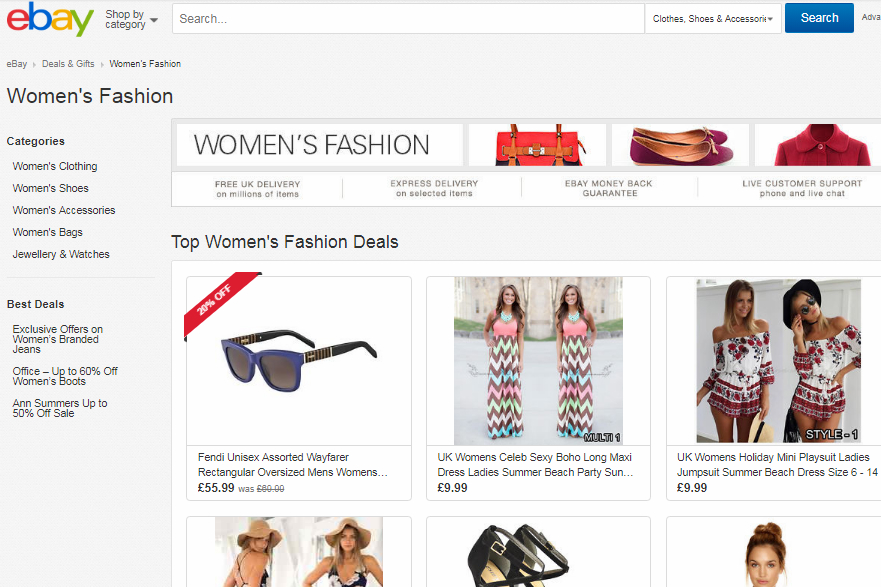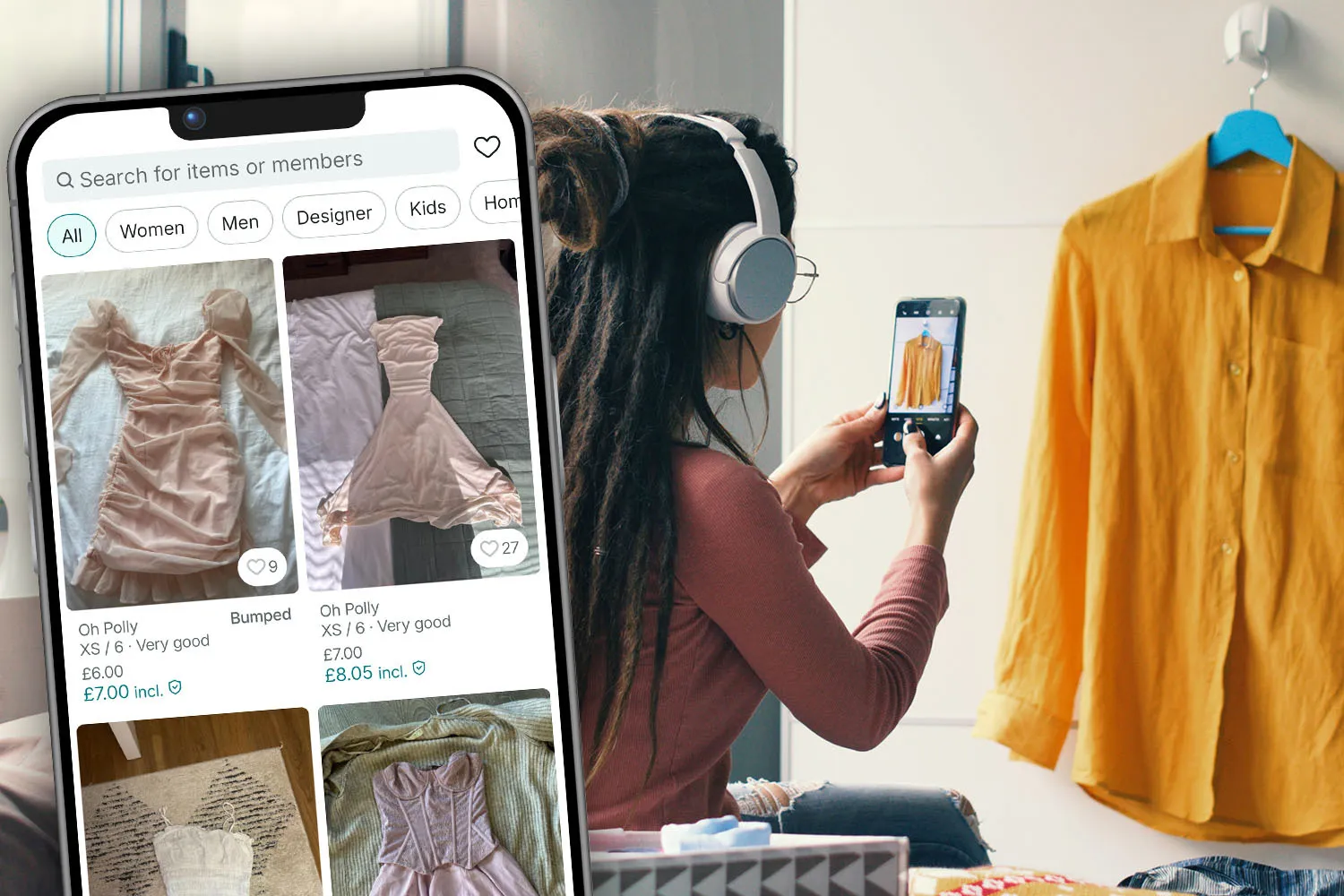
Vinted takes nothing from sellers when an item sells. For a UK eBay seller watching final value fees, per-order fees and ad fees stack up, that sentence is either the obvious next move or too good to be true. It is neither. This guide sets out what Vinted Pro actually is, when you are required to use it, what the zero-fee model really means for your margin, and how to test the channel properly without doubling your listing workload.
Why this became a real question in 2026
Cross-listing to Vinted used to be advice for people selling clothes. Two things changed that.
Vinted is no longer a clothing app
Look at Vinted's own category navigation now and you will find Electronics, Home, Entertainment, Hobbies & Collectables and Sports sitting alongside Women, Men, Designer and Kids. Vinted's 2025 brand campaign was built explicitly around categories beyond fashion, and the platform has added buyer-facing verification services for electronics specifically.
That matters enormously if you buy mixed return pallets. A pallet is never all clothing. It is a kettle, three phone cases, a pair of trainers, a board game, some homeware and something you cannot identify. Until recently only part of that could go to Vinted. Now most of it can.
The C2C market is consolidating
In February 2026 eBay agreed to acquire Depop from Etsy for around $1.2 billion, a deal that has since completed. The strategic reading is straightforward: eBay is buying its way toward younger consumer-to-consumer resale, and the competitive pressure on that segment is coming from Vinted, which reported 2025 revenue of roughly €1.1 billion on gross merchandise value of about €10.8 billion across 26 countries.
You do not need a view on marketplace strategy to take the practical point. Second-hand demand in the UK is not concentrating on one platform, and a single-channel business is a fragile one.
The fee comparison almost everyone gets wrong
"Vinted is free and eBay charges 12%" is the version you will read everywhere. It is true and it is misleading.
What Vinted charges sellers
Per Vinted's published price list, there is no commission, no listing fee and no payment processing cut taken from a seller's sale. The only fees a seller can incur are optional visibility purchases — bumping a listing for three or seven days, or a Showcase placement. Nobody makes you buy either.
What the buyer pays
Vinted earns from the buyer instead, through a Buyer Protection fee added at checkout. Vinted states this typically comprises a percentage plus a fixed amount, usually in the region of 3% to 8% plus £0.30 to £0.80, varying with item characteristics, order value and whether it is a single item or a bundle. The buyer also pays postage.
Why zero seller fees does not automatically mean more margin
Here is the part the fee comparisons skip. The buyer sees the all-in price, and it behaves like a price. If your item plus buyer protection plus postage lands above what a comparable item costs elsewhere, you do not sell it, and a 0% fee on an unsold item is worth nothing.
Vinted's audience is also a different audience. It is bargain-led and negotiation-led, average order values run lower than eBay in most categories, and there is no auction format to let a scarce item find its own ceiling. So the honest framing is not "Vinted is cheaper". It is: you keep 100% of a number that is often lower. Whether that nets out ahead depends entirely on the item.
Model it before you assume. Work your true landed cost with the Pallet Cost Calculator, then run the same item through the eBay Fee Calculator to see the eBay take-home. If the Vinted price you would realistically achieve beats the eBay take-home, the channel earns its place for that item. Often it does. Sometimes it very clearly does not.
What Vinted Pro is, and when you must use it
This is not optional for a trading business, and it is the part sellers most often get wrong.
Who has to register
Vinted's own guidance is that if you want to sell a high volume of items — more than clearing out your own wardrobe — you need to sign up as a professional seller. Sole traders, companies and non-profit organisations are eligible, and registration asks for your company registration number and other business details to confirm your business identity.
If you are buying stock to resell, you are trading. That is the test, not your volume, and it applies from the first item. Running a business through a personal account is a compliance problem waiting to surface.
Consumer law comes with the badge
Selling as a business to UK consumers brings obligations a private seller does not have, including the distance-selling cancellation rights under consumer contracts regulations and the standard requirements around goods matching their description. Your returns handling on Vinted therefore looks more like your eBay business seller obligations than like a private Vinted account. Read Vinted's Pro terms properly before you register rather than after your first return request.
What you gain
Unlimited listing volume, a business storefront, the Pro badge as a trust signal, and access to the same buyer base without a commission line. Sole traders can keep certain personal details private on the profile during registration, which is worth knowing if you trade from home.
Where Vinted genuinely beats eBay for a UK reseller
Being specific is more useful than being enthusiastic.
- Low-value stock. Items in the £5 to £15 range where eBay's percentage fee plus per-order fee plus VAT eats an unreasonable share. This is exactly the tier a pallet produces in bulk.
- Bundles. Vinted buyers actively buy bundles. Bundling is a genuinely good answer to a pile of individually unprofitable items.
- Fashion and kidswear. Still the deepest demand pool on the platform by a distance.
- No advertising tax. There is no equivalent of eBay's promoted listings attribution quietly attaching a percentage to sales you would have made anyway.
Where eBay still wins, and it is not close
Cross-listing is an addition, not a migration. eBay retains real structural advantages.
- Anything technical, boxed or niche. Parts, tools, electronics with model numbers, compatibility-driven items. eBay's item specifics and filtered search were built for exactly this and Vinted's attribute model is not a substitute.
- Higher-value items. Auctions, Best Offer and a buyer base conditioned to spend.
- Search intent. People arrive at eBay knowing the part number. That is a different and more valuable kind of traffic.
- International reach. eBay International Shipping began replacing the Global Shipping Programme in phases through August 2026, taking eligible UK listings from around 105 countries to more than 195, with buyers paying international postage and import charges.
The tax and reporting position, briefly
Adding a channel does not add a tax obligation, but it does add visibility.
Under the UK's digital platform reporting rules, platforms including eBay and Vinted collect seller details and report annually to HMRC by the end of January. Platforms are not required to report sellers who make fewer than 30 sales of goods and receive less than €2,000 — roughly £1,700 — in the reporting period. As a registered business you will be over that on one channel, let alone two, so assume everything is visible and reconcile your platform totals to your books rather than the reverse. HMRC's guidance for sellers is on GOV.UK.
Being reported is not the same as owing tax, and none of this is new tax law. It simply means the gap between what you declare and what the platforms say has closed. This is general information rather than tax advice — an accountant is the right call for your specific position.
What actually stops sellers cross-listing
Nothing above is controversial. Most sellers who have looked into Vinted agree it is worth trying. Very few have done it, and the reason is entirely operational.
To list an item on a second channel you re-photograph or re-upload images, rewrite the title for a different search behaviour, map your eBay category to a Vinted one, re-enter attributes in a different structure, set a price that works against a different fee model, and then keep the two in sync. Sell the item on eBay and you must remove it from Vinted before someone buys it there too, because overselling costs you a cancellation, a defect and a buyer.
Call it ten minutes per item and thirty seconds of risk per sale. Across 300 items that is a working week, and the sync problem never ends. This is why multi-channel selling is common advice and uncommon practice: it is not a knowledge problem, it is a throughput problem.
How to test Vinted properly in 30 days
Do not migrate. Test.
- Register as Pro first. Get the compliance right at the start. Retrofitting a business onto a personal account is worse than starting correctly.
- Pick 50 items deliberately. Low-value, fashion, homeware, kidswear, bundles — the stock eBay's fee structure treats worst. Do not test with your best eBay sellers.
- Price for the all-in number. Check what the buyer sees at checkout with buyer protection and postage included, and compare that to a competing Vinted listing, not to your eBay price.
- Run it for a full 30 days. Two weeks tells you nothing on a new account with no reviews.
- Compare take-home per item, not sale price. Vinted price versus eBay take-home after all fees. That is the only comparison that means anything.
- Decide by category, not overall. The answer will not be "Vinted works" or "Vinted does not". It will be that it works for four of your categories and not the other six. That result is the point of the test.
How MadLister removes the duplication
MadLister is built around the throughput problem that stops UK sellers acting on advice they already agree with.
One optimised listing, more than one destination
Rather than rebuilding each item per platform, MadLister optimises the listing once — category, item specifics, title, description, price guidance, weight and dimensions, images — and publishes from that single source. Platform availability is managed per account, so you can enable the channels you actually sell on and ignore the rest.
Bulk, not one at a time
The same optimisation engine runs on one listing or five hundred, so a bulk pass applies everything a single-listing run would. A fifty-item Vinted test stops being a week of evenings and becomes an afternoon.
Failures you can see and fix
Publishing to any marketplace API produces rejections — a missing attribute, an unmapped category, an image that fails validation. Smart publish retries and auto-corrects common causes, and anything that genuinely cannot go live appears in a failed listings table with the actual reason, so you can fix or bulk-action it instead of discovering the gap weeks later.
Clean data travels well
This is the underrated part. The work that makes an eBay listing rank — accurate category, complete specifics, a title built from real search terms — is the same work that makes a listing legible to any other marketplace. Fix it once and it pays on every channel you add. We covered why that data matters so much on eBay in why your eBay listings are not getting views, and why it also determines your ad costs in what eBay's promoted listings rules really cost you.
The full feature set is on the MadLister features page, with plans and pricing if you want to start.
Frequently asked questions
Do Vinted Pro sellers pay fees?
Not on sales. Vinted's price list shows no commission, no listing fee and no payment processing deduction from the seller. The only seller-payable charges are optional visibility purchases such as bumping a listing or a Showcase placement. Vinted earns from the Buyer Protection fee the buyer pays at checkout.
How much is Vinted's buyer protection fee in the UK?
Vinted states it typically combines a percentage with a fixed amount, usually around 3% to 8% plus £0.30 to £0.80, varying by item characteristics, order value and whether the order is a single item or a bundle. The buyer pays it on top of your price, and it does not reduce what you receive — but it does raise the total the buyer sees, which affects whether they buy.
Do I need a Vinted Pro account to resell?
If you are buying stock to sell on, yes. Vinted requires professional registration for selling beyond clearing out your own wardrobe, and eligibility covers sole traders, companies and non-profits. You will need your company registration number and business details, and you take on business-seller obligations under UK consumer law.
Is Vinted better than eBay for resellers?
It is better for some stock and worse for other stock. Vinted tends to win on low-value items, fashion, kidswear, homeware and bundles, where eBay's fee structure is harshest. eBay tends to win on technical, boxed, compatibility-driven and higher-value items, where filtered search and auction formats do real work. Most established resellers run both rather than choosing.
Can I list the same item on eBay and Vinted at once?
Yes, and most multi-channel sellers do, but you must be able to remove it from the other channel quickly when it sells. Overselling costs you a cancellation, a defect and a buyer. If you are cross-listing more than a handful of items, manage it from one place rather than manually.
The takeaway
Vinted Pro is a genuine opportunity for UK resellers in 2026, particularly now that the platform reaches well past fashion into electronics, home and collectables. The zero-seller-fee model is real. It is just not the whole picture: you keep 100% of a price that is often lower, against a buyer base that behaves differently, and with business-seller obligations attached from the day you register.
Test it by category rather than committing to it wholesale, and judge it on take-home per item rather than on headline fees. The channel will earn its place on some of your stock and not on the rest — and that split is exactly the information you are testing for.
List once, sell on more than one channel — bulk AI optimisation, correct categories, complete item specifics and direct publishing, built for UK sellers. Or start with the free eBay Fee Calculator and work out what your current channel is really paying you.